

HDR10, Dolby Vision and HLG: HDR Formats Explained for UK Viewers
We still remember the first time we streamed a BBC iPlayer nature documentary in HDR on a properly capable TV. The same footage we had watched for years suddenly had depth — sunlight glinting off water, shadows that held detail instead of crushing to black, colours that looked natural rather than washed out. It was also the moment we realised our old television had been holding back the picture all along. If you are shopping for a 4K TV in the UK or wondering whether your current set is doing your streaming subscriptions justice, the alphabet soup of HDR formats is worth ten minutes of your time.
What Is HDR and Why Does It Matter for Your 4K TV?
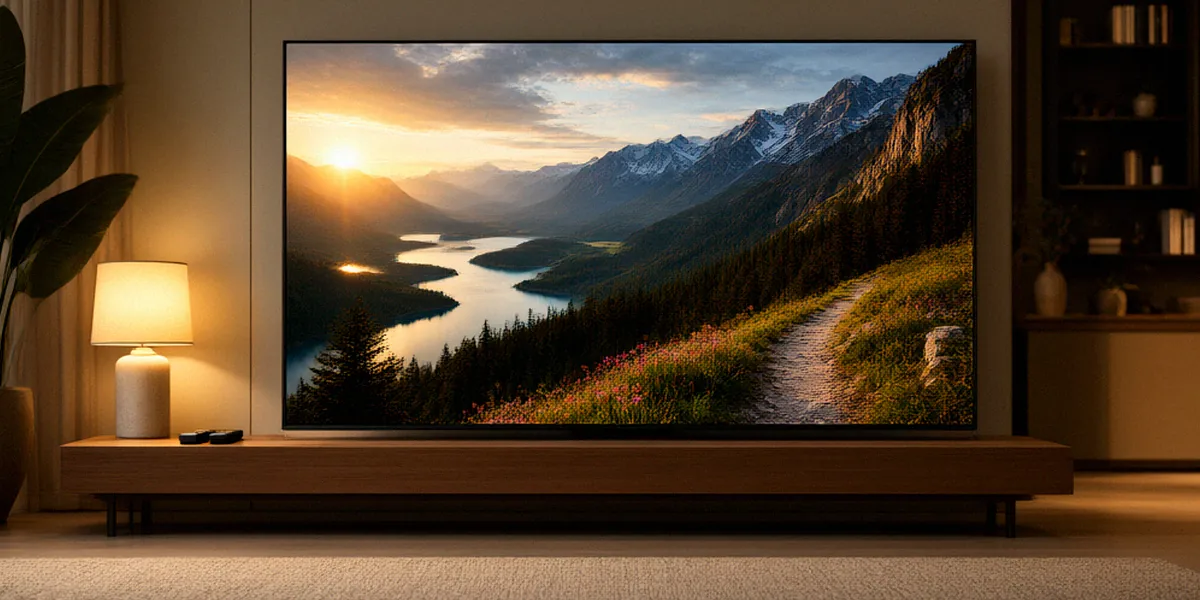
High dynamic range (HDR) is a genuine leap over standard dynamic range (SDR) in three areas: brightness, contrast and colour. Where SDR content was mastered for relatively modest brightness and a limited colour palette, HDR content can carry specular highlights that genuinely sparkle, deeper blacks and a wider range of colours. In a UK living room, that matters more than you might think. Evening viewing with a lamp on, grey winter afternoons, a window behind the sofa — all of these affect how much of the picture you actually perceive. A good HDR set handles those conditions far more gracefully than an SDR one.
The good news is that most 4K TVs from LG, Samsung and Sony now support at least one HDR format, and often several. You do not need a flagship model to benefit, but you do need to know which formats your TV handles before you commit to a streaming service or a 4K Blu-ray player.
Brightness, Contrast and Colour: The Three Pillars of HDR
Brightness determines how convincingly highlights pop — think fireworks, headlights or a sunlit beach. Contrast is what gives an image depth, separating a dark coat from a darker background. Colour, specifically wide colour gamut, lets the panel reproduce shades that SDR simply cannot reach. When all three work together, the image stops looking like a television picture and starts looking like a window.
How HDR Differs from 4K Resolution Alone
Resolution is about how many pixels are on screen. HDR is about what those pixels can do. A 4K TV without good HDR support can look flat next to a well-implemented 1080p HDR display. This is why we tell readers to prioritise HDR capability over chasing 8K resolution — the visible upgrade in a typical UK living room comes from dynamic range, not pixel count.
HDR10: The Open Standard Most UK Streamers Use
HDR10 is the baseline format you will encounter most often. It uses static metadata and 10-bit colour, and because it is royalty-free, almost every 4K TV and streaming stick on sale in the UK supports it. Netflix, Amazon Prime Video and Disney+ all offer HDR10 in the UK, which means if your TV handles HDR10, you already have access to a huge library of HDR content.
Static Metadata Explained Without the Jargon
Static metadata means the HDR instructions are set once for an entire film or episode. The TV is told “this is the brightest and darkest the content will get” at the start, and it applies that setting throughout. It works well, but it cannot adapt to a particularly dark scene followed by a blindingly bright one.
Which UK Streaming Services Rely on HDR10?
- Netflix — HDR10 across a large portion of its original and licensed catalogue
- Amazon Prime Video — HDR10 on many films and series, with some titles in HDR10+
- Disney+ — HDR10 on most Marvel, Star Wars and Pixar titles
- Sky Q and Virgin Media — both carry HDR content, largely built around HDR10 and HLG depending on the broadcast
Dolby Vision: Dynamic Metadata and Premium Picture Quality
Dolby Vision takes the same idea and makes it scene-by-scene. Instead of one set of instructions for the whole film, each scene carries its own metadata, so the TV adjusts brightness and tone mapping on the fly. Netflix, Apple TV+ and a good number of 4K Blu-ray discs sold in the UK support it. On the hardware side, LG, Panasonic and Philips TVs are common Dolby Vision supporters, while Samsung continues to avoid the format in favour of HDR10+.
Dynamic Metadata: Why Scene-by-Scene Matters
A night-time chase scene and a midday desert scene have wildly different brightness requirements. Dynamic metadata lets the display honour both without compromise, which is why Dolby Vision often looks more consistent across a whole film rather than just in the showcase moments.
Dolby Vision vs HDR10: Real-World Differences on a UK TV
On a mid-range TV, the difference can be subtle. On a high-end set with strong peak brightness, Dolby Vision frequently looks more refined — better shadow detail, less clipping in highlights. If you are choosing between two TVs at similar prices and one supports Dolby Vision, it is usually the safer long-term pick.
HLG: The Broadcast HDR Format Behind BBC iPlayer
Hybrid Log-Gamma was co-developed by the BBC and NHK specifically for broadcast. BBC iPlayer uses HLG for its HDR broadcasts, including Wimbledon and landmark nature series such as Planet Earth. The clever part is backward compatibility: an HLG signal still looks correct on an SDR TV, which suits broadcasters and viewers who are upgrading their equipment gradually rather than all at once.
How HLG Works for Live Sport and Nature Documentaries
Live sport benefits enormously from HLG because there is no time to hand-craft metadata for every shot. The format is designed to look natural on whatever display receives it, from a ten-year-old set in a kitchen to a new OLED in the lounge.
BBC iPlayer HDR: What You Need to Watch It
You need a compatible TV or streaming device, a stable connection, and the correct iPlayer settings enabled. Not every programme is available in HDR, and the BBC labels UHD and HDR content clearly in the interface. If your TV supports HLG, you are already most of the way there.
Which HDR Format Should You Prioritise for Home Cinema UK?
For most UK households, the practical answer depends on what you watch and what you watch it on. If you stream heavily via Netflix, Disney+ or Apple TV+, Dolby Vision is worth prioritising. If you rely on Sky Q or Virgin Media, HLG and HDR10 matter more. If you use an Apple TV 4K box, you get broad format support regardless of your TV brand — provided the TV itself can display it.
Matching HDR Formats to Your Streaming Devices
- Sky Q — HDR10 and HLG for selected live and on-demand content
- Virgin Media — HDR content via its TV boxes, typically HDR10 and HLG
- Apple TV 4K — Dolby Vision, HDR10 and HLG, depending on the TV
- Amazon Fire TV Stick 4K — HDR10, HDR10+ and Dolby Vision on supported models
Do You Need a New Soundbar to Enjoy HDR?
No, but a good soundbar transforms the experience. Sonos and Samsung are popular soundbar brands for UK home cinema setups, and pairing one with your TV completes the picture even if your display lacks one or two HDR formats. Picture gets you halfway; sound finishes the job.
Common HDR Myths and Settings We Recommend
Two myths come up constantly. The first is that any HDR is better than SDR — untrue, because a poorly implemented HDR mode can look worse than a well-tuned SDR picture. The second is that more brightness always wins. In a typical UK living room, controlled brightness with accurate tone mapping beats a searing panel that clips highlights.
Why Filmmaker Mode and Calibration Beat Format Logos
Filmmaker Mode disables motion smoothing and other processing that distorts the director’s intent. Combined with a basic calibration — or even just switching off dynamic contrast and setting the picture mode to Cinema or ISF — it will improve your viewing more than chasing every HDR badge on the box.
HDR and Gaming on PS5 and Xbox in the UK
Both consoles support HDR10, and the Xbox Series X also supports Dolby Vision in supported games. Enable HDR in the console settings, use Game Mode on the TV to reduce input lag, and calibrate the in-console HDR sliders carefully — they make a bigger difference than most people expect.
FAQ
Does my old 4K TV support HDR?
Many 4K TVs from 2016 onwards support at least HDR10. Check your model number on the manufacturer’s website — LG, Samsung and Sony all list supported formats clearly.
Is Dolby Vision worth paying extra for?
If you stream a lot on Netflix, Disney+ or Apple TV+, yes. If you mainly watch broadcast TV via Sky Q or Virgin Media, HLG and HDR10 coverage matters more.
Can I watch BBC iPlayer in HDR on any TV?
No. Your TV or streaming device must support HLG, and you need to be watching a programme the BBC has published in HDR, such as Wimbledon or selected Planet Earth episodes.
Why does Samsung not support Dolby Vision?
Samsung backs HDR10+ instead, a rival dynamic metadata format. It is a strategic choice rather than a technical limitation, and HDR10+ content is available on Amazon Prime Video.
Do I need a soundbar to enjoy HDR?
Not for the picture, but a soundbar from Sonos or Samsung will noticeably improve the overall home cinema experience, especially for films and sport.
Understanding HDR10, Dolby Vision and HLG is really about matching the right format to the right screen and the right streaming service. UK viewers do not need every format on the box — they need the ones that match what they actually watch, whether that is BBC iPlayer documentaries, Sky Q sport or a Netflix boxset. Get that match right, add a decent soundbar, and you will enjoy your home cinema far more than by chasing every logo on the spec sheet.